

Let’s be honest — diamonds can feel a little intimidating. Between all the cuts, grades, and terms that sound straight out of a science lab, it’s easy to get lost. But here’s the thing: once you understand the 4 C’s, you’ll see that picking your perfect diamond isn’t complicated at all — it’s empowering.
Let’s talk about what really makes that diamond shine — and how to choose one that’s as brilliant as you are.

1. Cut
If diamonds were people, cut would be their personality — and oh, does it matter.
A diamond’s cut determines how light dances inside the stone. It’s not about the shape (like round or oval) but how perfectly it’s been proportioned and polished.
Excellent or Ideal Cut: Maximum sparkle. The diamond reflects light like a disco ball at golden hour.
Very Good Cut: Still stunning, just a tiny bit less fiery.
Good or Fair Cut: May look a little dull or flat compared to higher grades.
2. Color
Diamonds come in subtle shades — from icy white to warm champagne tones. The scale goes from D (colorless) to Z (light yellow or brown).
Here’s the scoop:
D–F: Colorless and rare (aka luxury goals).
G–J: Near-colorless and absolutely gorgeous — the sweet spot for beauty and value.
K–M: Slight warmth you can see in certain lights, but still sparkly if well-cut.
Pro tip: If your diamond is going in a yellow or rose gold setting, you can go for a slightly warmer diamond (like H–J) — the metal’s tone will complement it perfectly.


3. Clarity
No one’s perfect — not even diamonds.
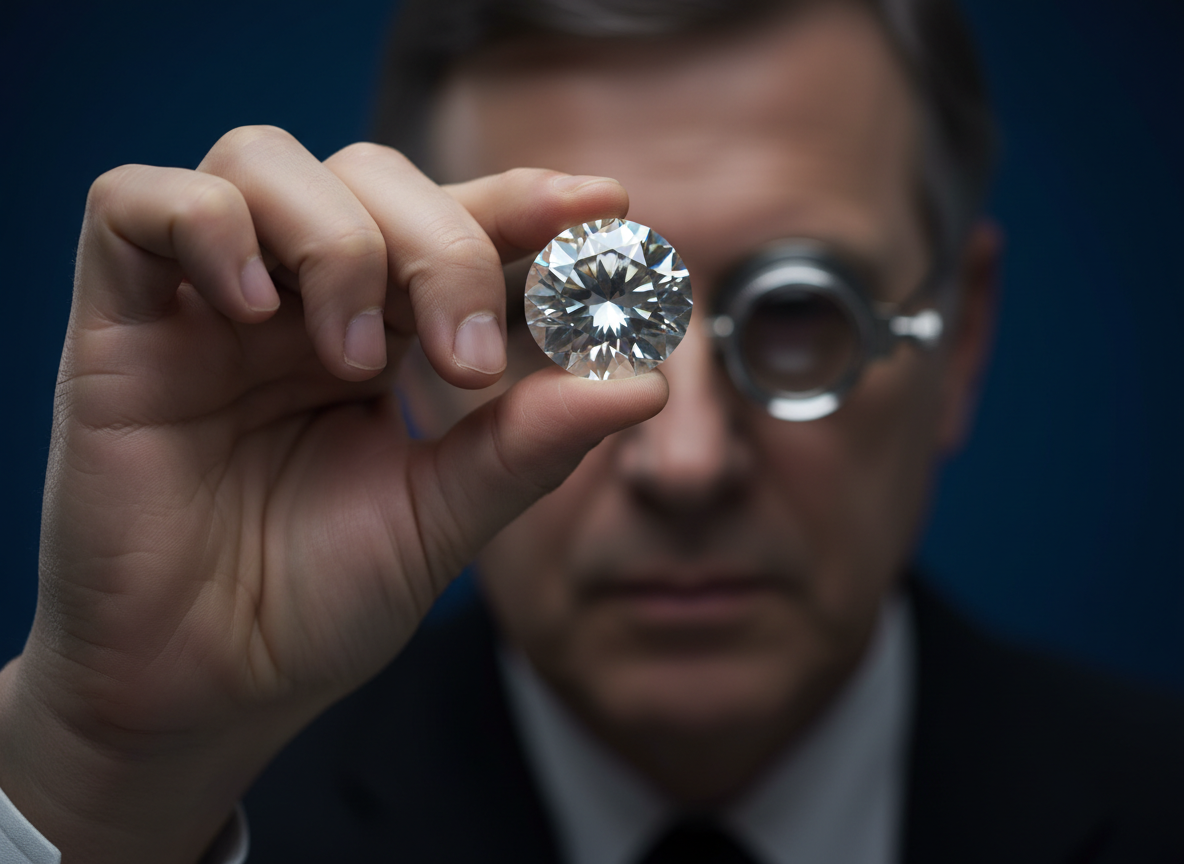
Clarity measures how clean a diamond is from tiny natural marks called inclusions or blemishes. Think of them as a diamond’s birthmarks — unique and usually invisible unless you’re zoomed in like a jeweler on a mission.
The clarity scale runs from:
FL / IF: Flawless or Internally Flawless — super rare and super pricey.
VVS1–VVS2: Very, very slightly included — nearly perfect.
VS1–VS2: Very slightly included — tiny inclusions that are still hard to spot.
SI1–SI2: Slightly included — great value, and many look clean to the naked eye.
I1–I3: Included — visible marks that may affect sparkle or durability.
Real talk: You don’t need a flawless diamond. Most women can happily live in the VS or SI world and still get a stunningly clean-looking stone.
4. Carat
Ah, carat — the one everyone talks about first… but should actually come last.
Carat is simply the weight of the diamond, not the size (though they do correlate). And here’s the magic: a well-cut smaller carat diamond can outshine a poorly cut bigger one any day.
Here’s what to know:
Bigger doesn’t always mean better — brighter does.
Carat weight affects price more than anything else, sometimes dramatically.
Two diamonds of the same carat can look totally different depending on shape and cut.
(A 1-carat oval looks larger than a 1-carat round because of its elongated shape.)
✨ Pro tip: If you’re trying to maximize size for your budget, look for “magic number” close calls — like 0.9 carat instead of 1.0, or 1.8 instead of 2.0. They look nearly the same but cost noticeably less.


